StillHere Pilot
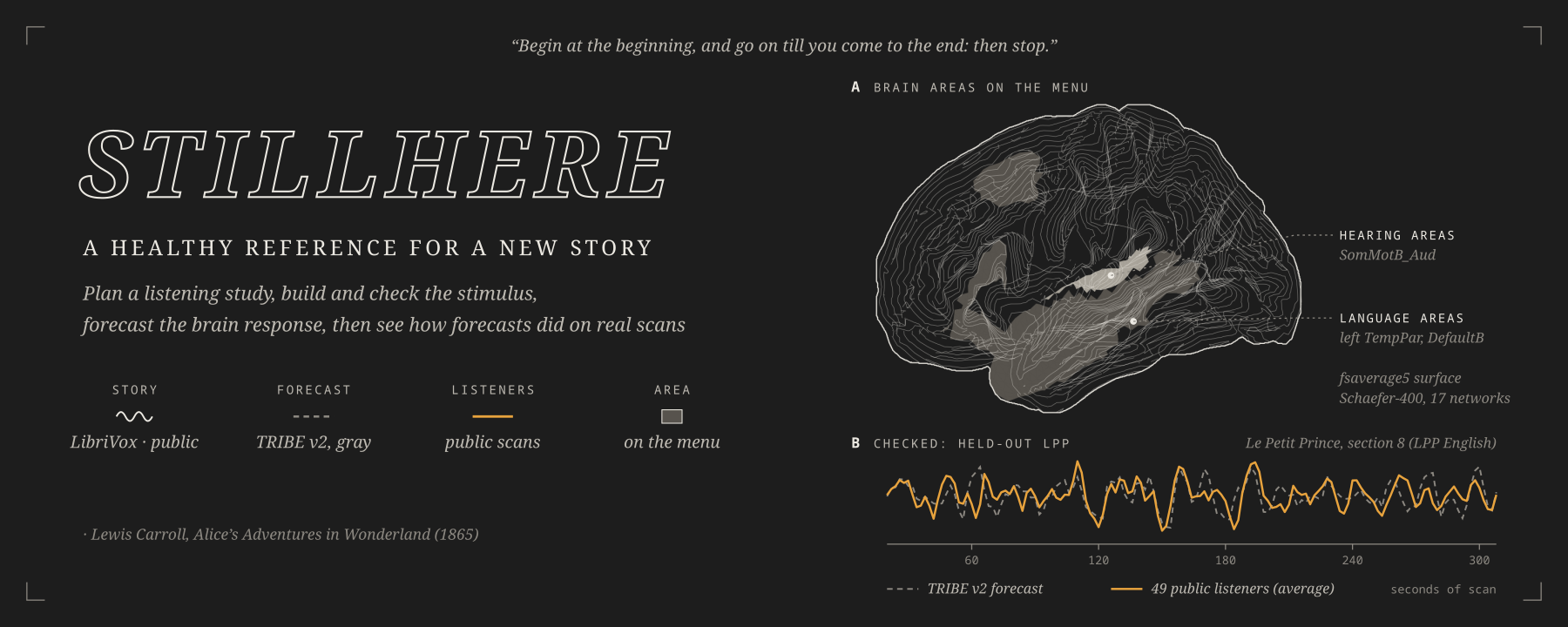
A healthy-brain reference for a new story, before anyone is scanned. Type a study; StillHere plans it, builds and checks the stimulus, and forecasts the healthy-adult brain response with TRIBE v2, live on a laptop. Research tool. Healthy volunteers and public data only.
Loading live status.
1. Plan
2. Build and check
The condition is cut at sentence boundaries with short crossfades; Muse Voice Transcribe reads the built audio back and fills the checklist. A failed check blocks the build.
3. Audit
Muse Spark Open reads the plan and leaves notes. Advisory check, not measured: it never blocks anything.
4. Forecast
5. Did the forecasts hold up?
Each forecast against real public scans, scored by a rule written down first. These panels replay committed results files.
6. Film: the same loop on video
Why this station: the face test in Evidence asks how TRIBE's forecast changes when the faces in a film are filled in. SAM 3.1 masked the faces in the first 190 s of Tears of Steel; StillHere filled them with the surrounding colour, and filled a same-size patch elsewhere in each frame as a control. TRIBE forecasts all three versions, and the face test compares the forecast's face map with face maps from the scans of 16 people who watched the film. Type "face", or another word, to make the same edit on three frames here.